Marble Mines
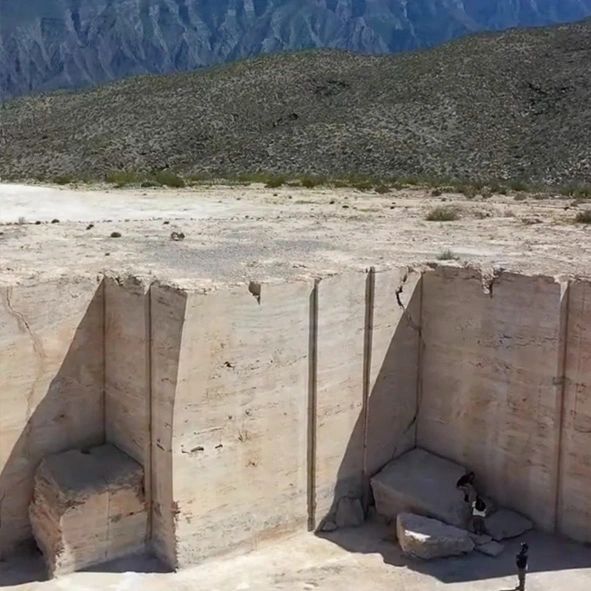
A 19th-century marble quarry, now one of the most dramatic landscapes in Coahuila. Marine ammonite fossils, 360° panoramic views, and a night video mapping that transforms marble walls into art.
A marble quarry that holds the sea
that existed here 100 million years ago
Before this was desert, Cuatro Ciénegas was the floor of a prehistoric sea. When the waters retreated, they left the sediments that today form the marble of this 19th-century quarry. On the white and gray marble walls — carved by hand by generations of stonecutters — are embedded the fossils of ammonites and marine organisms from that vanished sea. You can see them with your hand inches away.
Some of the large marble blocks have been artistically transformed: dinosaur fossil sculptures with Huichol art — a fusion between the paleontology of the site and the indigenous tradition of northern Mexico. At night, the same marble becomes a canvas: a video mapping show projects the history of the desert onto the 100-meter walls — one of the few shows of this kind in all of Mexico.
A day (and night) at the Marble Mines
The mines are best visited in the afternoon for the golden light — and at night for the video mapping. You can return the same day or stay overnight. We'll build the itinerary together.
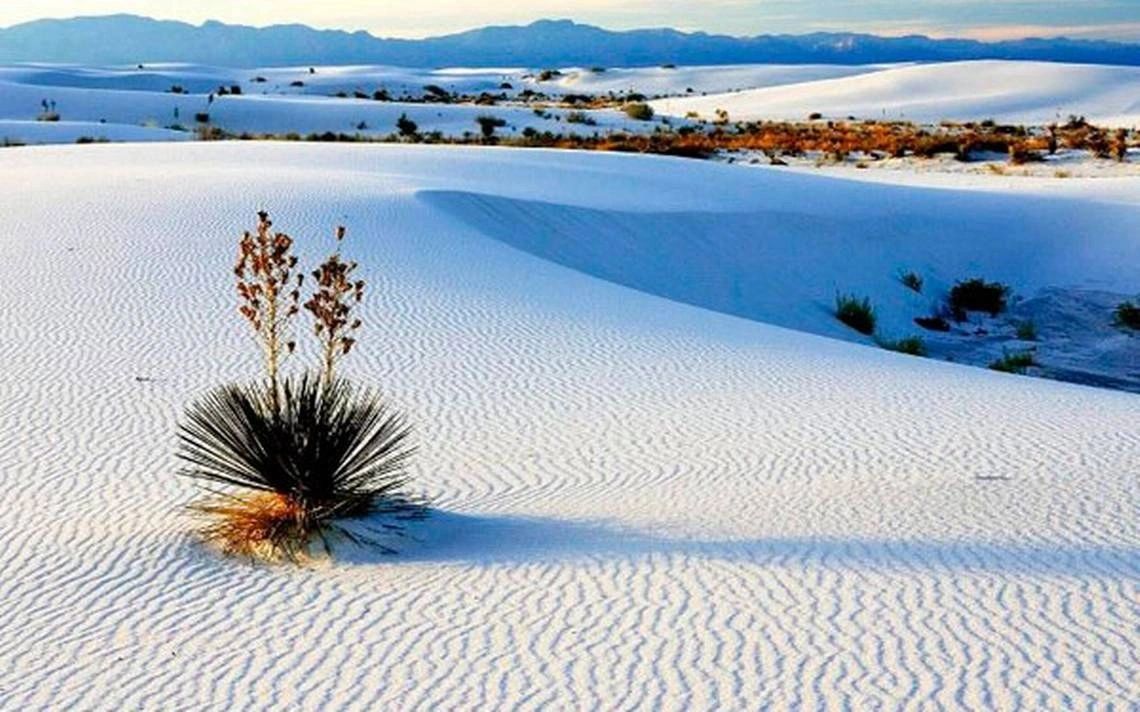
Mezquites River, Blue Lagoon, or Gypsum Dunes. The mines are saved for afternoon to take advantage of the golden light.
Your guide explains the quarry's history, the fossils visible in the walls, and the geology of Coahuilan marble.
From the highest point, the entire Cuatro Ciénegas valley unfolds: springs, dunes and desert all the way to the horizon. The best view of the whole destination.
The marble walls become a 100m-tall screen. Projections narrate the history of the desert, the prehistoric seas, and the community of Cuatro Ciénegas. A show with no equivalent in northern Mexico.
Unrepeatable shots
Raking light on marble
The golden afternoon light highlights the texture and fossils in the walls. Dramatic, high-contrast results.
Valley panoramic
Wide angle from the top: springs, dunes, sierra, and sky. One photo that explains the entire destination.
Video mapping in action
Tripod essential. High ISO, slow shutter. Projections onto marble are stunning with long exposure.
Video mapping requires a tripod and manual mode on your camera. Long exposure (1–4 sec, f/5.6, ISO 800) to capture the projections correctly without ghosting.
What's included
- Round-trip transport from Monterrey
- Certified guide with geological knowledge
- Mine area entrance fee
- Night video mapping access
- Fossil and geology explanation
What to bring
- Shoes with good grip (uneven terrain)
- Light jacket (desert nights are cool)
- Tripod for night photography
- Headlamp or flashlight
- Water and snacks
- Extra battery for your phone
The ammonite fossils in the quarry walls are direct evidence of a sea that covered this region more than 100 million years ago. Extracting, touching, or damaging the walls is not permitted. The quarry is an active scientific site: researchers continue studying the fossil record here.